Trends and key insights from Michael Good, Director of Company & Product Development
INVEST IN YOUR BRAND – ESPECIALLY IN UNCERTAIN TIMES
Many food and beverage companies are operating in survival mode. Inflation, retailer pressure, financial constraints, and the need for immediate ROI have pushed brands toward short-term activations.
As a result, many companies spend 70–80% of their marketing budget on promotions, conversion campaigns, and sales activation, while only 20–30% goes toward brand building.
The problem: short-term activity is easier to measure, so it often wins budget, even when it does not create long-term value.
As more products enter the market, many categories start to look and sound the same. When consumers cannot tell the difference, price becomes the easiest comparison.
Strong brands protect against commodification. They give consumers a reason to choose beyond price.
The 60/40 Principle:
60% Brand Building
Builds long-term growth, recognition, preference, emotion, memory, differentiation, and profit.
40% Sales Activation
Drives short-term conversion, promotions, immediate sales lift, and measurable ROI.
Many brands are operating in the reverse, putting most of their budget into activation. This creates sales spikes, but it does not raise the baseline demand needed for sustainable growth.
Sales activation creates peaks. Brand building raises the baseline
AI and AUTOMATION
Keep AI Behind the Scenes. Consumers do not want to hear that AI was involved in their food, and they certainly do not want to see AI-generated food in marketing materials. AI is best used internally to support forecasting, production planning, inventory, marketing efficiency, and decision-making.
Automation is no longer just about solving labour shortages. It can help companies scale, reduce unit costs, improve consistency, and become stronger retail partners. Atlantic Canadian companies struggle with cost of logistics, so they are forced to find other ways to save money. Focus on reducing waste, optimizing efficiency, and invest in automation where it makes sense. Think big. Get out, get accounts, and grow your business.
High-quality data is essential for digital transformation. Many companies need to improve how they collect and use sales, inventory, production, and margin data before adopting more advanced tools.
BEYOND CUSMA
1.Diversification is no longer optional
The U.S. will remain a critical market, but overdependence creates risk. Trade uncertainty should push Canadian companies to explore new markets and become more productive, efficient, and innovative.
2. Growth is outside traditional markets
With limited growth in many Western economies, Canadian food companies should look to Latin America, Asia-Pacific, and other high-population regions. The U.S. represents roughly 350 million consumers; global markets represent billions more.
3. Canada has a premium food advantage
Canada’s reputation for food safety, quality, reliability, and consistency is a major export asset. PEI companies can use this to position products at a premium rather than competing only on price.
4. Trade agreements are underused
Canada has trade agreements with 53 countries, but many SMEs do not fully understand or use them. Businesses need to first determine whether their product makes sense in a specific market, then dive into regulations, labelling, language, logistics, and market-entry requirements.
5. Private label is a strong entry point
Private label is growing globally and represents a practical way to enter new markets where Canadian brands may not yet be recognized. Companies can build branded products later, once relationships and demand are established.
6. Value-added protein is a global opportunity
The trend has shifted from “plant-based” specifically to broader value-added protein. Seafood, meat, dairy, and other protein products with convenience, nutrition, and quality appeal are well-positioned.
7. Exporting requires calculated risk
Canadian companies may need to become more comfortable testing new markets, learning quickly, and moving on when an opportunity does not work. Strategic partnerships, distributors, and even small acquisitions can help reduce risk and accelerate new market entry.
NOTES & OBSERVATIONS FROM THE SHOW FLOOR
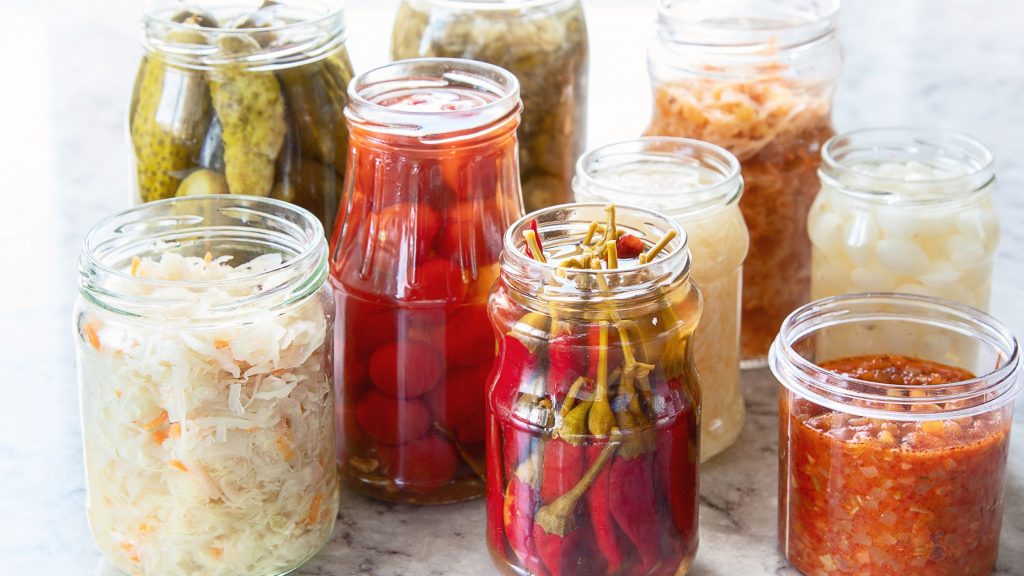
Most products on the floor were grocery/retail focused, especially snack foods, spreads, condiments, preserved foods, baking/pastry, grains/cereals, and ready meals.
Convenience was a front and center. Familiar products in more convenient formats. Many products were positioned around ease of use: ready-to-heat rice pouches, frozen pancakes ready in 45 seconds, ready-to-use organic legumes, preserved vegetables, juice formats, and foodservice/bulk frozen plant-based spreads.
Protein and functional nutrition were prominent. e.g. high-protein overnight oats, high-protein peanut butters, almond flour, ancient grains/rice bowls, and nut/seed-forward products. Major focus on everyday convenience upgraded with protein, fibre, no-added-sugar, plant-based, etc.. Many products stacked claims for greater impact (e.g. high protein, natural ingredients, no prep). Better-for-you has become a baseline and is no longer a differentiator.
There has been a shift away from using high intensity sweeteners (e.g. stevia, sucralose), and going back to natural sweeteners like cane sugar or honey.
Flavours and ingredients had a strong regional focus, with origin-led marketing e.g Canadian cheeses, Greek olive oil, Sri Lankan tea, Mediterranean pickles, and imported sauces using provenance as a quality signal. Beyond regionality there was also a theme around traditional flavours, street food inspiration, and global flavours in convenient formats. Many brands are leaning into a more “heritage” feel, likely to connect to consumers looking for a more authentic experience.
Shelf-stable formats dominated the show. Pouches, cans/jars, preserved vegetables, sauces, wafers, cookies, snacks, nut butters, honey, oils, and dry ingredients. Although there were still many refrigerated/frozen convenience products that were positioned as premium (e.g. premium desserts, infant food, fermented beverages). Frozen products focused on freshness and flavour preservation.
There were several products focused on locally foraged ingredients that tied in a sense-of-place e.g. beverages featuring regional botanical extracts
Many suppliers were not just selling branded SKUs; they were advertising private label manufacturing/export capability.
High prevalence of foodservice bulk-format products focused on reducing kitchen labour and adding global flavours without requiring specialized skills